
Monday 22nd
An empty trap was the result of luring for Dusky Clearwing in the Whitehouse area. The Conservation Team were treated to a fresh Garden Tiger in the field and a few Silver Ys were day-feeding around the Oasis.
Sunday 21st
An LED in the Whitehouse brought in 58 moths of 29 species. An odd trap composition-wise as Pigmy Footman was one of the more numerous moths with four present. Brown-tail, Scarce Footman and Agonopterix kaekeritziana were new for year with other highlights of Mullein Wave and Eyed Hawk-moth.
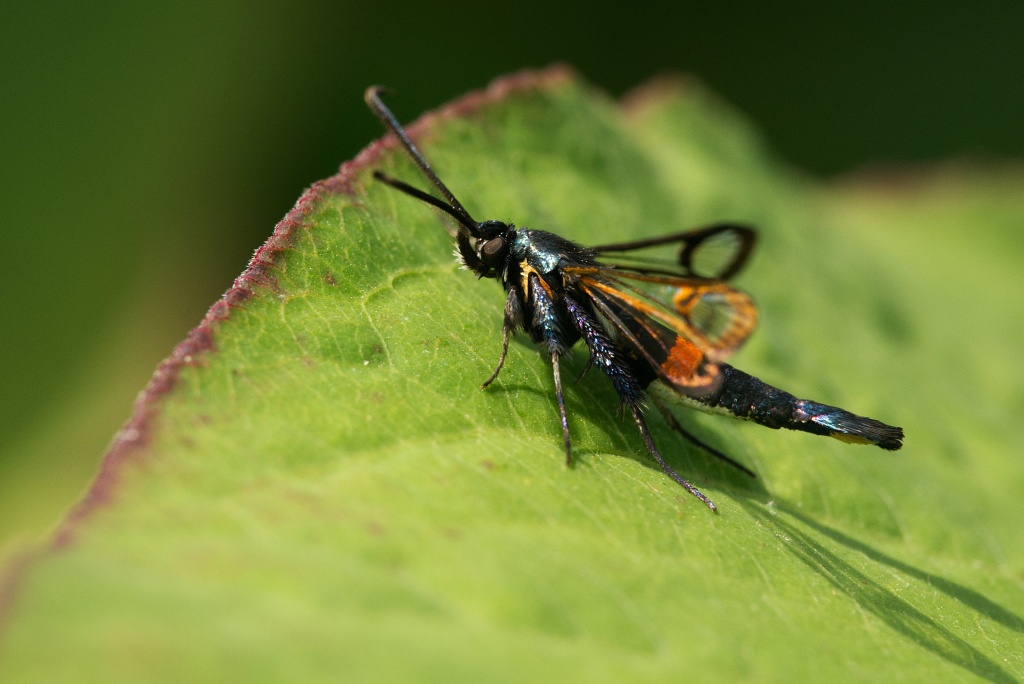
Pheromone lures performed well in the warm, five Lunar Hornet Clearwings were in the Whitehouse and a Red-belted Clearwing was around the Obs.
Saturday 20th
A Red-tipped Clearwing came to pheromone lure at the Obs.
Friday 19th
A diverse catch at 287 moths of 91 species, possibly due to numbers of Large Yellow Underwing dropping to 22. Least Carpet, Wormwood Pug, Dingy Footman, Dun-bar and Sciota rhenella were all new. There were a few migrants in a Dark-sword Grass, two Rusty-dot Pearls, two Turnips and four Small Mottled Willows.
Thursday 18th
Another warm night but the skies cleared a little, dropping numbers to 262 of 67 species. Large Yellow Underwings still lead the counts at 85 and Dark Arches were creeping up in numbers with 30 present. Only two moths were new for the year - one of our regulars in White-line Dart and the other was the fifth Observatory record of Minor Shoulder-knot.
Wednesday 17th
A busy night, two LEDS and an actinic were placed around the salt marsh near the Point and another LED amongst Sea Buckthorn along Princes Beach. It's still early days for our salt marsh specialists so an underwhelming catch wasn't too surprising, however the trap on the beach attracted 180 moths of 45 species. Silky Wainscot, Catoptria pinella and Brachmia inornatella are scarce sightings for the Recording Area plus there was another Spurge Hawk-moth. Most surprising was the sheer amount of Sharp-angled Peacock with 80 present!
The Car Park trap saw a mass emergence of Large Yellow Underwing as 101 were blundering around the trap. 345 moths of 74 species were present including our fourth record of Small Angle Shades. New species for the year were Buff Arches, Round-winged Muslin, Common Emerald and Evergetsis Limbata. Migrants were scarce despite the southerlies, being limited to five each Diamondback and Small Mottled Willow plus one Dark Sword Grass.
Monday 15th
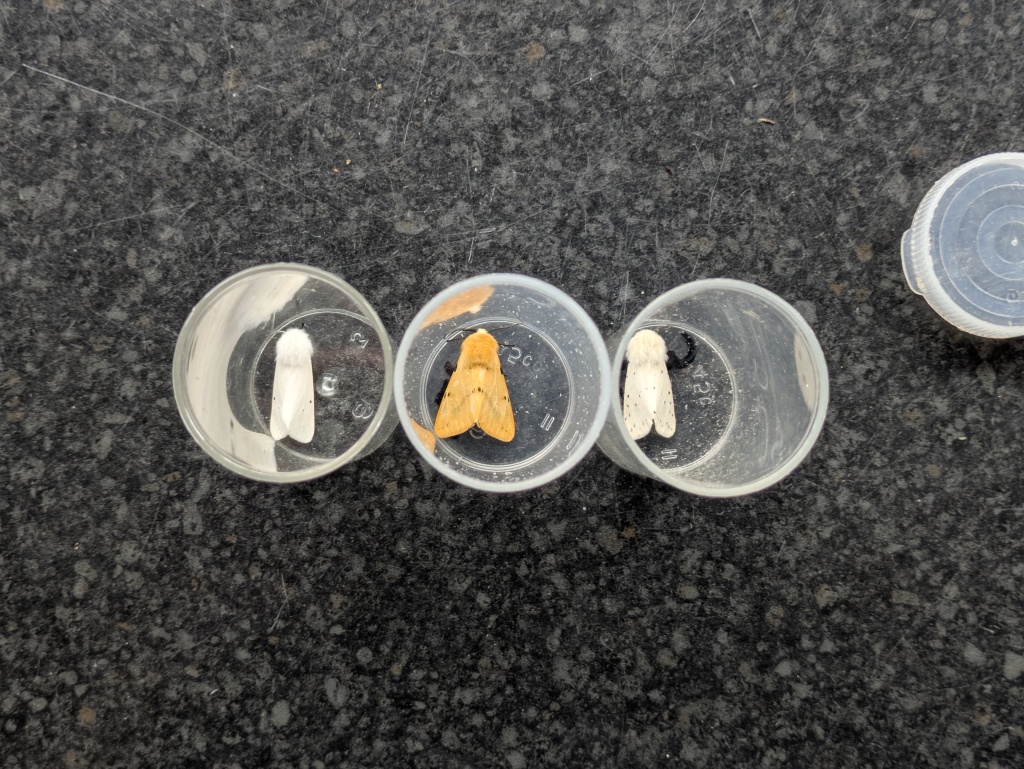
Oddly quiet despite the still night. 104 moths of 42 species were in the Car Park trap where a hat-trick of the ermines were the highlight - four Buff Ermine, two Water Ermine and a White ermine.
An LED targetting Poplar on New Downs had 37 of 25 though most were of the usual suspects. Dingy Shears and Kent Black Arches were of note here.
Saturday 13th
The squally showers had moved on and it was noticeably warmer. The trap was back out along with some traps in the field.
The main trap held 173 moths of 47 species and provided a nice variety of regular species. There are more 'similar' species pairs appearing eg- Rustic/Uncertain, Reddish Light Arches/ Light Arches and Common Wainscot/Smoky Wainscot. A Miller was new for the year. A few migrants appeared- Eight Diamondbacks, five Small Mottled Willows and a Dark Swordgrass.
The traps from other sites produced Rosy Wave new for the year, Silver-barred and White Colon.
Three LEDs and an Actinic were spread around each of the Gullies and the Elms, producing a middling 118 moths but a good variety of 51 species. Scorched Carpet, Engrailed, Pale Oak Beauty, Argyresthia brockeella and Archips crataegana were all new, the later three being excellent records away from the main trap.
Hopefully we can show you these this evening.
Thursday 11th
The first Narrow-bordered Five-spot Burnet and Six-spot Burnet moths were seen along the beach along with Platytes cerussella and Cydia microgrammanna.
Wednesday 10th
A cool 7.1°C dropped numbers around the Obs to 121 moths of 35 species from two MV traps. The highlight was a fresh Water Ermine, six Buff Ermines but unfortunately no White Ermine to complete the set. Migrants were but a trickle with a Dark Sword-grass, a Silver Y and four Diamondbacks.
Tuesday 9th
Although the forecast for the next couple of nights is very unsettled and 'cold' after that it gets warmer and should be good for the weekend.
With a minimum of 7.1°C the catch fell to 126 moths of 32 species. Although most migrants were down to singles eg Small Mottled Willow, Silver Y actually increased to 13.
Monday 8th
Although it was a very blustery day the wind relented and there was cloud at times, keeping the temperature at a minimum of 12.8°C. This allowed the wave of migration to continue. The highlight was TWO Eastern Bordered Straws - one in the main trap and one in a small portable trap. Also in the main trap were 29 Small Mottled Willows, six Diamondbacks, two Silver Ys and singles of Pearly Underwing and Bordered Straw. The origins of a Clancy's Rustic are debatable considering what is going on.
Southern Wainscot and Clay were new for the year. Large Yellow Underwings continue to appear in good numbers with 82 last night. It may well be that some of these are migrants as well, or, that the population is on an up after a couple of quiet springs.
Saturday 6th
The blustery winds continued and there were even a few more showers, but the ground remained dry. There was enough of a break last night to put the trap out and considering the wind and the temperature down to 9.1°C it was worth it. There were 190 moths of 51 species. Migrants continued to appear headed by another Striped Hawk-moth and 17 Small Mottled Willows. There were also four Diamondbacks, two Silver Ys and singles of Pearly Underwing, Dark Sword-grass and Rusty-dot Pearl. The most frequent resident was Large Yellow Underwing with 36 individuals.
Wednesday 3rd
Despite the horrible daytime rain, the night was dry and allowed for trapping. Strong westerly gales set in so a trap around the feeders was set in hopes of another scarce migrant. 119 moths of 29 species was the result, 59 of which were Diamondback. Yesterdays Small Mottled Willows had clearly moved on as only three were present today and a Rusty Dot Pearl was the only other migrant.
Tuesday 2nd
The Car Park trap was chanced despite the forecasted showers as a four hour gap in the rain of total cloud cover, high temperatures and humidity plus a light south-westerly was far too good to miss. The reward was the first EASTERN BORDERED STRAW for the Recording Area. This year has seen an unprecedented influx of this scarce migrant across the southern counties and following an uptick in Kent records over the last few days, one was surely bound to grace our traps!
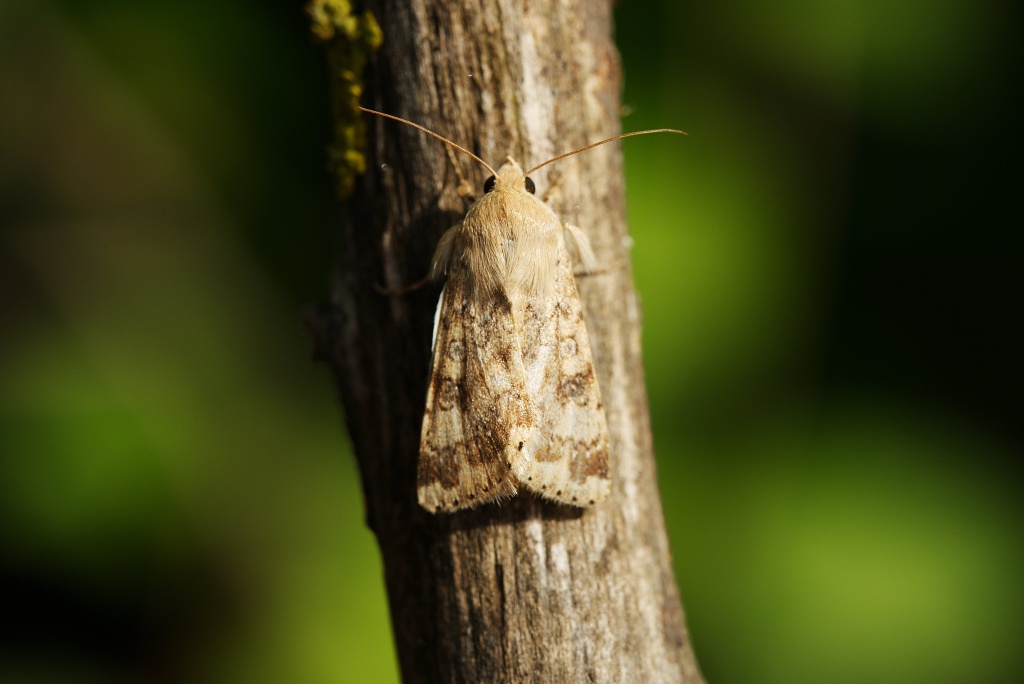
The rest of the trap was no slouch either with 395 moths of 71 species. Small Mottled Willow was the most numerous of the catch with an incredible 47 caught, an Observatory record. Other migrants included our fifth Striped Hawk-moth of the spring, a Rush Veneer, a Dark Sword-grass, two Pearly Underwings, three Turnips and 17 Diamondbacks. New for the year were Elephant Hawk-moth, Lesser Yellow-underwing, European Corn-borer and Pseudargyrotozoa conwagana.
Monday 1st
It did not feel any cooler but the thermometer went down to 10.9°C. It was another busy night, a Spurge Hawk-moth and another Striped Hawk-moth were the highlights along the shore towards Prince's. The car park trap had 314 moths of 64 species. This was aided by another wave of Diamondbacks, 127 stayed in the trap plus another 23 Small Mottled Willow. The latter outnumbers other regular migrants such as Silver Y by some margin so far.
Also of note a White Colon made it 'inland' and there was the tiny but colourful micro Cosmopterix scribaiella.