Tuesday 29th
Although it was warm last night it rained almost continuously and the trap was not set.
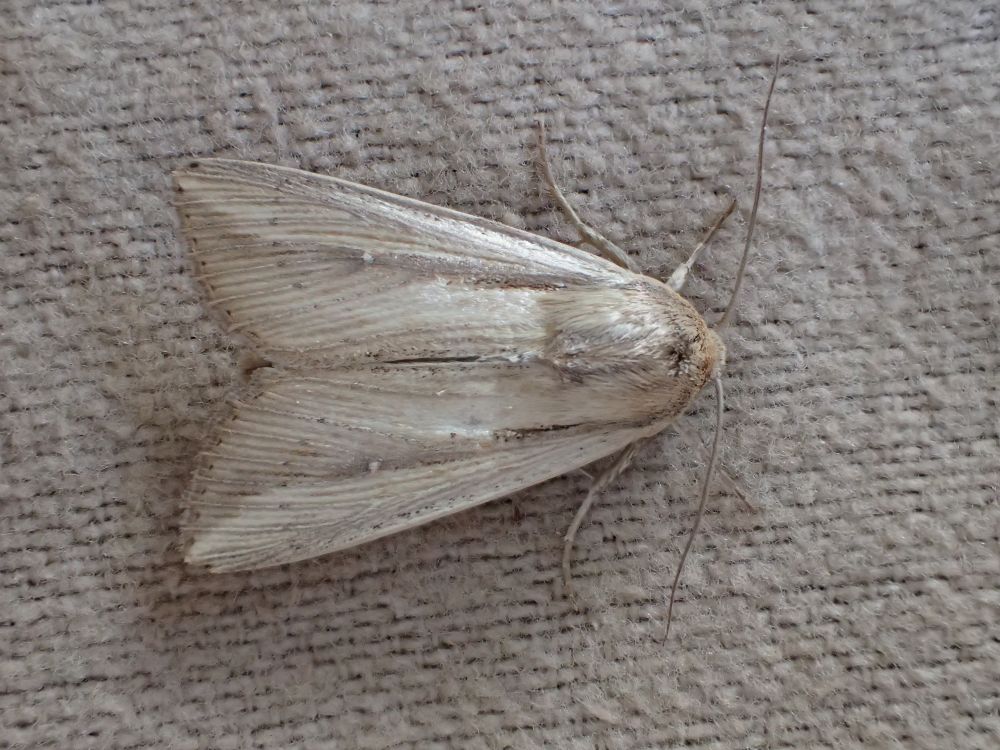
During the hot, humid day there was at least one Hummingbird hawk-moth feeding on the Verbena bonarensis.
Monday 28th
Some cloud and even a shower overnight kept the temperature up and the moon covered a bit. There were 142 moths of 30 species. Two each of Feathered Brindle and Red-line Quaker were new for the year. More migrants showed with a Vestal, three Rush Veneers, four Small Mottled Willows, a Dark Sword-grass and a Pearly Underwing.
Sunday 27th
What I forgot yesterday was just how bright the current full moon is. I was left in no doubt today when the count of moths in the trap reached the heady heights of 12. Lunar Underwing top scored with five. The only migrant was one Rusty-dot Pearl.
Saturday 26th.
The thermometer said last night was warmer with a minimum of 13.6°C. This did not seem to impress the moths and there were 77 of 26 species. Two Beaded Chestnuts were new for the year. Migrants included two each of Palpita vitrealis and Vestal plus a Small Mottled Willow.
Thursday 24th
A bit cooler with a minimum of 8.9°C. The catch reduced to 94 moths of 26 species. The top two were the same as yesterday with 22 Square-spot Rustics and 21 Large Yellow Underwings. September Thorn increased to three. There are still some migrants namely two Small Mottled Willows and singles of Rush Veneer, Silver Y and Scarce Bordered Straw.
Of local moths Deep-brown Dart is appearing with another today. Quite where a Treble-brown Spot came from I do not know but is probably a late generation.
Wednesday 23rd
Another clear night with a minimum of 10.9°C. There were 171 moths of 35 species. Large yellow Underwing (37) lost its top spot to Lunar Underwing (38). September Thorn continued its impressive run with another two examples. The migrants were 15 Rusty-dot Pearls, two each of Small Mottled Willow and Rush Veneer plus a Silver Y and a Beet Moth.
Tuesday 22nd
A bit warmer at 10.0°C but the night was clear again. 204 moths of 33 species were caught. There was a slight south-westerly and migrants picked up with seven Vestals, five Small Mottled Willows, two Rush Veneers, two Rusty-dot Pearls and a Turnip. Mallow, Deep-brown Dart, Black Rustic, and Green-brindled Crescent were new for the year though most interesting was the first Scarce Umber for six years and the earliest record by around six weeks.
Eight portable LED traps were set around the Estate, producing a rather middling 165 moths of 37 species with some traps having just single-digit counts. Of note were a Four-spotted Footman and a Barred Sallow in Restharrow Dunes, five Rusty Dot Pearls and six Turnips in Waldershare Gully and a Vestal from Little Gully. A total of ten Clancy's Rustic were also caught.
Monday 21st
The wind fell right away and the sky cleared resulting in a much lower minimum of 6.9°C. The number of moths decreased to 181 of 33 species. The most notable drop was Large Yellow Underwing with 'just' 59. Lunar Underwing is definitely on the way up and there were 37. There were still some migrants - three Rush Veneers, two Rusty-dot Pearls, and singles of Vestal, Scarce Bordered Straw and Small Mottled Willow.
Sunday 20th
It remained unexpectedly windy overnight but there was a layer of cloud which kept the temperature above 16°C. This resulted in a busy night with 617 moths of 48 species in the trap. Half of these were Large Yellow Underwings (305) and there were 87 Square-spot Rustics. The list of migrants was good and included the 4th Clifden Nonpareil this autumn, another Convolvulus Hawk-moth, Golden Twin-spot, 17 Small Mottled Willows, four Vestals, three Scarce Bordered Straws, eight Rush Veneers, a Pearly Underwing and a Dark Sword-grass. Residents included two Dusky Lemon Sallows and 23 Lesser Broad-bordered Yellow Underwings. Seven Clancy's Rustics could well have been migrants but they are settled in the south-east as well.
Saturday 19th
Although it was very windy it clouded over and remained warm with a minimum of 15.6°C. The number of moths shot up to 337, of 27 species. The majority were of two species - 221 Large Yellow Underwings and 88 Square-spot Rustics. There was still enough room for our first record of Heath Rustic. In some areas it is thought that Radford's Flame Shoulder has established itself but ours seem to turn up late in the season and may well still be migrants, there was one last night. Other migrants were three Small Mottled Willows, two Silver Ys and singles of Dark Swordgrass and Scarce Bordered Straw. There was only one micro, probably due to the wind strength, it was a Teleiopsis diffinis.
Friday 18th
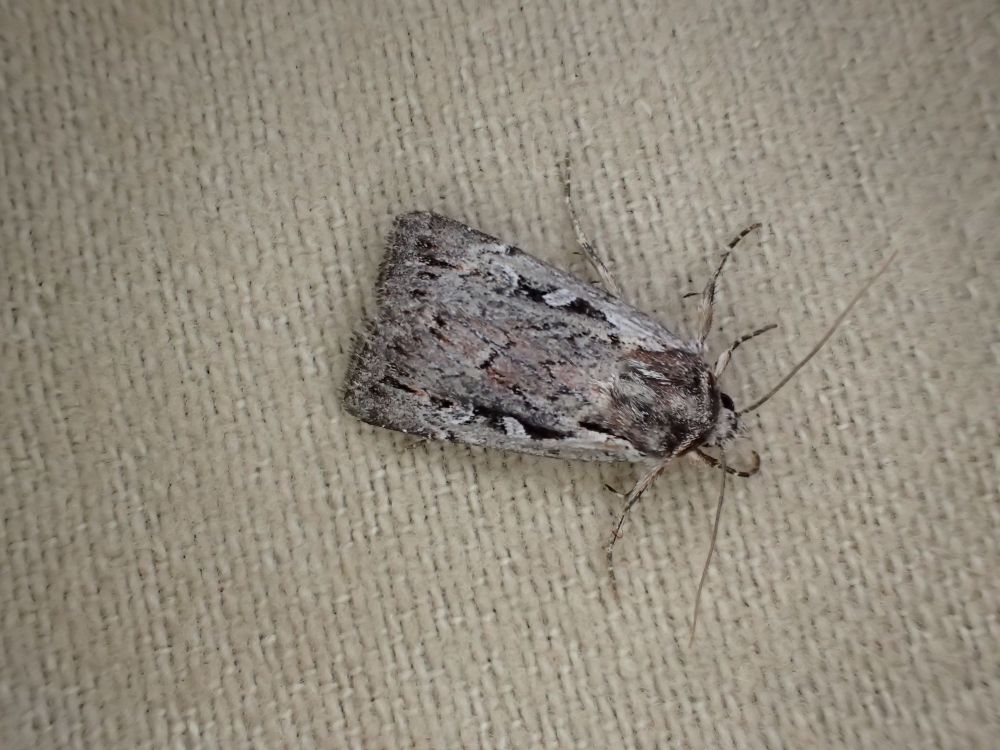
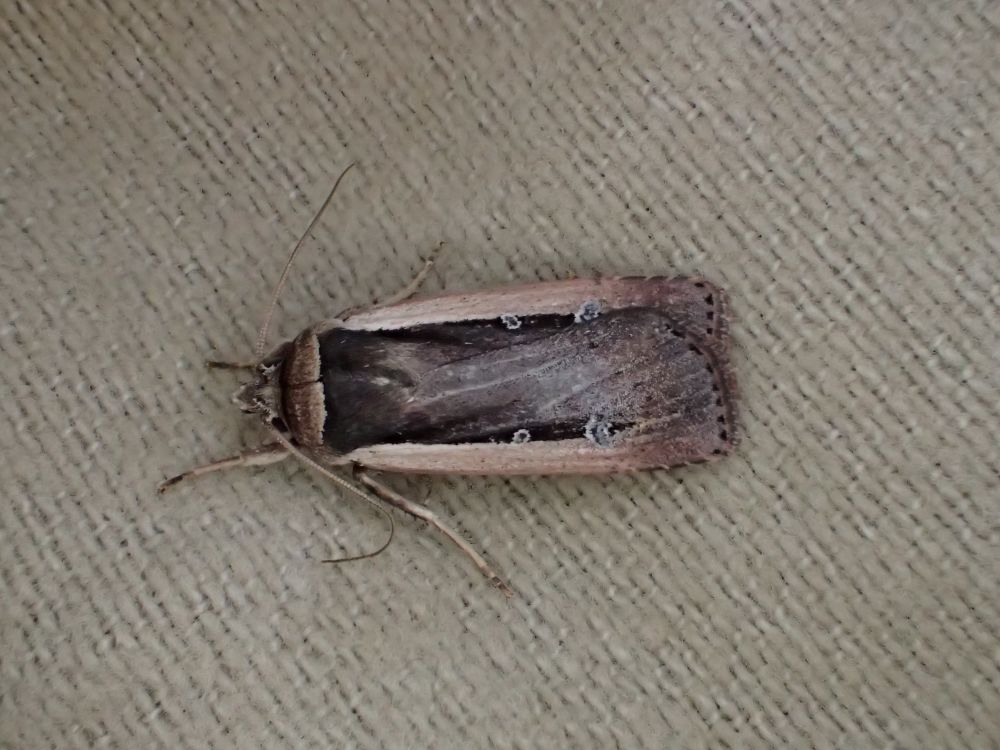
Last night was cooler with a minimum of 9.1°C. This reduced the catch to 134 moths of 25 species. Dusky-lemon Sallow was new for the year.
Thursday 17th
A slight increase to 207 moths of 37 species. A good night for migrants, two Convolvulus Hawk-moths were immediately apparent in the trap along with 12 Rush Veneers, five Small Mottled Willow, two Silver Y and singles of Rusty Dot Pearl, Turnip, Pearly Underwing and Vestal. September Thorn and Pinion-streaked Snout were the best of the residents.
Wednesday 16th
A fresher feel was forecast and delivered with a minimum temperature of 10.3°C. The catch reduced accordingly and there were 180 moths of 41 species. Large Yellow Underwing reduced to 79. There were still some migrants, Vestal is having a good run and there were another five, but Small Mottled Willow was down to four.
Tuesday 15th
Last night felt warm again but there was a breeze and this reduced the temperature to 14.5°C. The catch dropped to 286 moths of 43 species. The highlight was a female Four-spotted Footman plus a splendid Bulrush Wainscot. Large Yellow Underwing was down to 121. There were 14 Small Mottled Willows, six Rush Veneers, four Rusty-dot Pearls and three Vestals.
A portable trap by the Whitehouse produced a very round 100 moths of 20 species including the first Autumnal Rustic this year.
Monday 14th
The night started with some heavy showers and cloud remained giving another warm, humid, night with a minimum of 16.2°C. There were 404 moths of 58 species plus a Clifden Nonpareil which did not make it into the trap.
There were 193 Large Yellow Underwings and 53 Square-spot Rustics. Migrants included 17 Small Mottled Willows, many of which are very well marked and not the worn specimens often seen earlier - are they locally bred?
There were also five Palpita vitrealis, four Rush Veneers, and singles of Pearly Underwing, Silver Y and Rusty-dot Pearl.
Sunday 13th
Although last night started very windy the wind dropped and a layer of cloud kept the temperature above 16.4°C. The trap was busy with 521 moths of 57 species. Large Yellow Underwing showed it was enjoying the conditions and there were at least 243. The next nearest was Square-spot Rustic with 41. Next generations of several species are emerging e.g. Yellow-tail, Brown-tail, Obscure Wainscot, and Clancy's Rustic. A Langmaid's Yellow Underwing was possibly a migrant rather than one of the resident population, which have not been around for over a month. Other migrants included two Vestals, eight Rush Veneers, three Scarce Bordered Straws and best of all another Convolvulus Hawk-moth.
Small Square-spots have been notable by their absence. Some years it can be common but not this year so far.
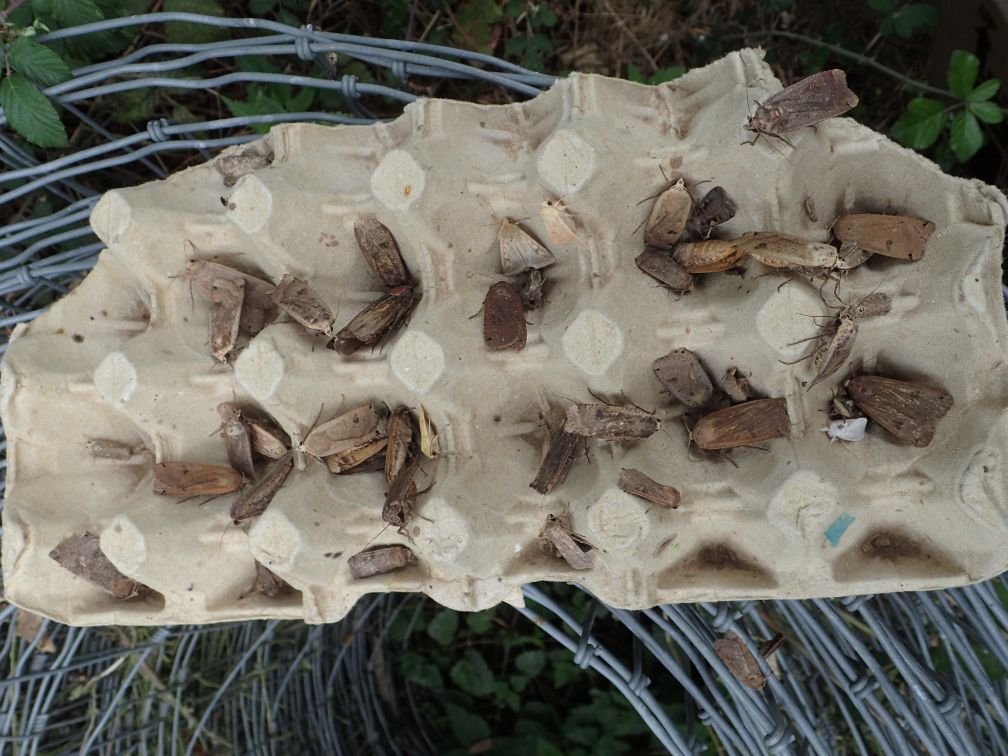
Last nights moth evening was well attended and a good variety of moths were looked at.
Saturday 12th
With the moth evening tonight two traps were operated - the car park and the feeders ones.
For once there were more moths at the feeders, but only just. There were 141 of 31 species compared to 136 0f 35 species. Large Yellow Underwing was most numerous in the car park with 47 but Square-spot Rustic was most numerous at the feeders with 30.The most interesting record was found underneath the trap - a Brindled Green. This is very scarce here and indeed the first one I remember seeing.
Portable traps located in the Whitehouse, Restharrow Dunes, Waldershare Gully and the Dragonfly Pools yielded 206 moths of 54 species. Of note were eleven Kent Black Arches, interestingly all confined to the Dragonfly Pools, seven Vestals and singles of Poplar Hawk-moth, Blackneck, Elachista biatomella and Cosmopterix pulchrimella.
A visitors trap added Palpita vitrealis.
Wednesday 9th
The autumnal nights are setting in. It was fairly clear last night and there were 190 moths. One-hundred-and-twenty-nine of these were Large Yellow Underwings demonstrating a wide range of colours. The only migrants were two Small Mottled Willows and a Rush Veneer. The second Pink-barred Sallow of the autumn showed but Sallows have not got going yet.
Tuesday 8th
Rain was forecast and although it arrived a bit later than expected it started fairly gently. despite the cloud the temperature was a bit cooler at 15.3°C. There were 213 moths of 51 species. Pink-barred Sallow was new for the year and the next generation of Hoary Footman appeared. Large Yellow Underwing remained most numerous with 73 but Small Mottled Willow was next with 37. There were also 17 Rush Veneers plus singles of Dark Sword-grass and Vestal.
Monday 7th
Temperatures shot up to 16.7°C and with a light south-easterly in the air.
The main trap held 337 moths of 67 species. Golden Twin-spot was new for the year. Migrants included Small Mottled Willow, two Rush Veneers and two Vestals and a Scarce Bordered Straw. If we were in any doubt that autumn was on the way the first Lunar Underwing of the year removed any doubt. A visitors trap added Clifden Nonpareil and Gem.
Jonny's creation of portable LED traps has confirmed what we hoped but did not have evidence for. The dunes are still in good health entomologically. As listed below some of the residents which do not wander a couple of hundred yards inland are in good numbers.
Six LED traps were set along the beach in the hopes of new-in migrants. The catch numbered 1,123 moths of 62 species and coincided with a mass emergence of Agriphila latistria of which 578 were caught. Archer's Dart took second place at 138 and the usually numerous Sharp-angle Peacock only numbered five. Other coastal species included two Salt Marsh Plumes, ten Shore Wainscots, and 18 Nyctegretis lineana. While migrants were few and far between, there was quite some quality on offer with a Small Marbled, an Acrobasis tumidana, Radford's Flame Shoulder and the third Observatory record of Euchromia ocellea, although the first three could be settled here at least temporarily.
Sunday 6th
Conditions were typical early autumn. The wind dropped and there was a bit of cloud. The minimum temperature was 9.8°C
There were 204 moths of 37 species. Small Mottled Willow just outnumbered Rush Veneer 17 to 16.
Saturday 5th
it was cooler last night at 10.5°C. The catch dropped to 162 moths of 34 species. Large Yellow Underwing remained most numerous with 47. Another Convolvulus Hawkmoth was the highlight. Other migrants included 12 Rush Veneers, nine Small Mottled Willows, a Pearly Underwing and a Vestal.
Friday 4th
Despite and even more windy night the minimum temperature was 19°C! The main trap held 324 moths of 36 species. Unsurprisingly there were barely any micros. Large Yellow Underwing continued its resurgence with 156 counted. The migrants were 11 Small Mottled Willows, three each of Scarce Bordered Straw and Dark Sword-grass, plus a Rush Veneer.
Interestingly the trap at the back of the Ringing Room had just 11 Large Yellow Underwings but there was a Convolvulus Hawk-moth. There were 86 moths of 30 species.
Thursday 3rd
Considering the strength of the wind it was not a bad catch. There were 310 moths of 57 species. It was interesting to record the sudden appearance of Large Yellow Underwings with 88 counted. There was also a late Middle-barred Minor. Migrants included just eleven Small Mottled Willows, three Pearly Underwings, five Silver Ys and two each of Vestal and Rush veneer.
Wednesday 2nd
Mild, overcast, conditions with a minimum of 12.7°C saw additional traps deployed at the south-end of the Estate and it was very much worth it. The highlight was the first ever record of PASSENGER caught in The Elms. A supporting cast of Barred Hook-tip (only our third record and first since 1992) and Clifden Nonpariel added to the interest. Other migrants included 25 Rush Veneers, 17 Small Mottled Willows, five Vestals, five Rusty-dot Pearls and two Dark Sword-grasses.
The car park trap caught 190 moths of 54 species. No rarities to add to the list but migrants included 22 Small Mottled Willows, six Rush Veneers, two Vestals, a Scarce Bordered Straw and a Diamondback.
Tuesday 1st
The most settled night for a while and six portable traps were set in the Whitehouse to take full advantage of it. A combined 296 moths of 62 species were caught, the high numbers coinciding with an emergence of Feathered Gothic numbering 17 and Hedge Rustic which was unusually the most numerous in the traps at 43. Singles of Elachista biatomella, Portland Ribbon Wave, Maiden's Blush, Cynaeda dentalis and four Agonopterix kaekeritziana rounded out the catch.
There was also the third Musotima nitidalis (Golden Fern). This antipodean species has established a foothold in the UK, probably having arrived on tree ferns, and would appear to be settling here as well.
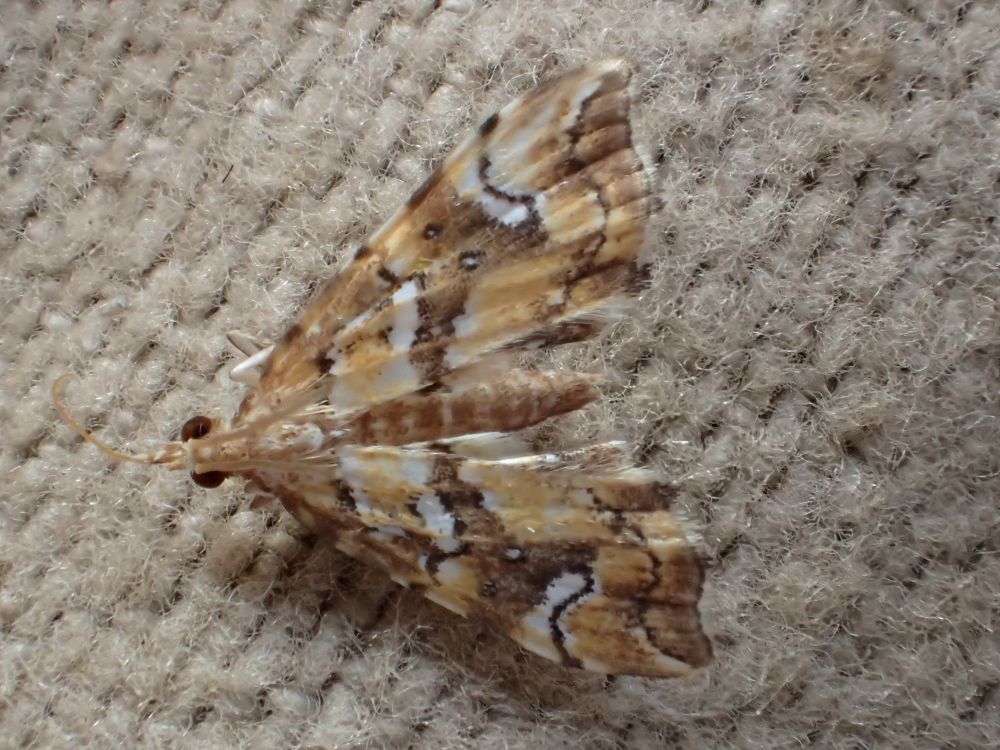
With a minimum temperature of 11.1°C the car park trap did well. There were 223 moths of 55 species. The highlight was the second ever record of Cosmopolitan, the first was in 2011. The most numerous species was Ancylosis oblitella. This species is doing very well this year and there were 34. Next was Small Mottled Willow with 27. Other migrants included six Rush Veneers, four Vestals, two Silver Y's and a Scarce Bordered Straw.
Of resident species there was the second generation of Blackneck and a Caloptilia rufipennella.