Wednesday 13th
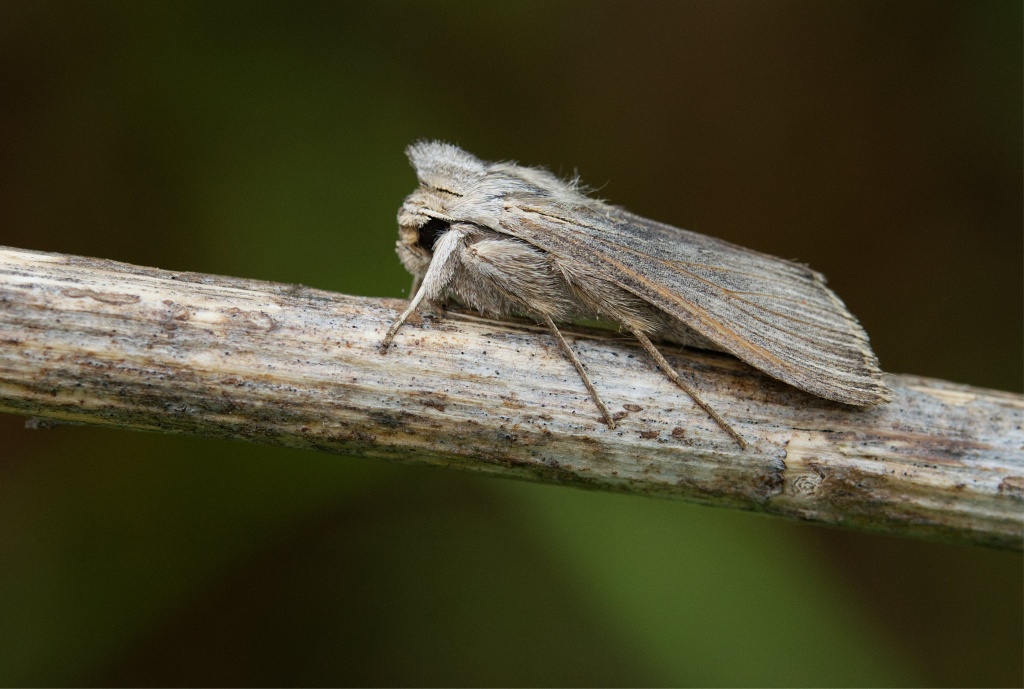
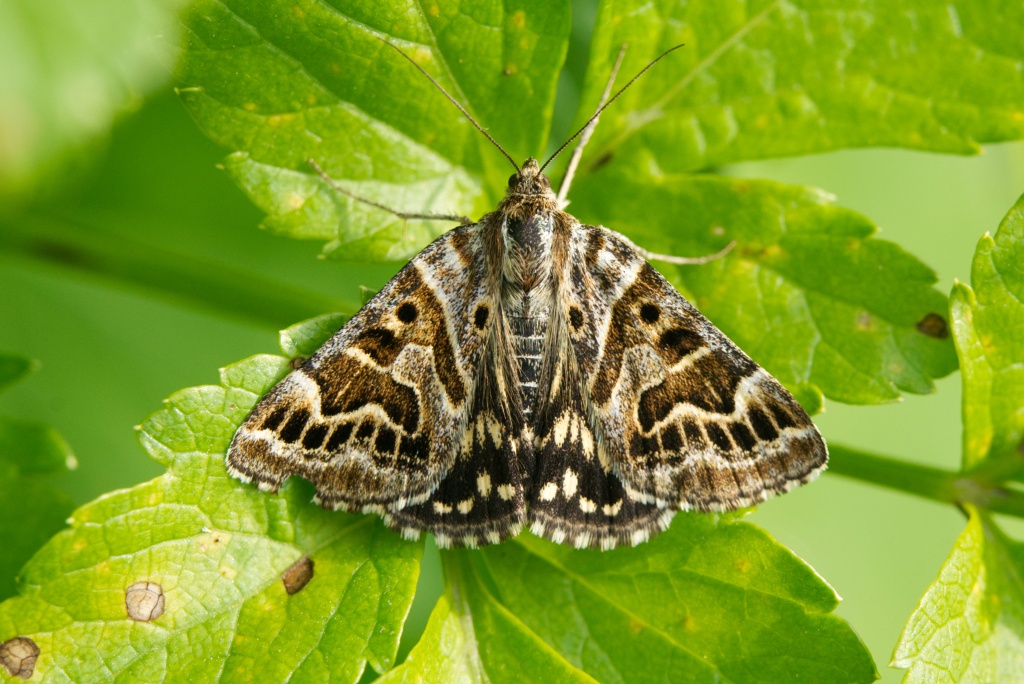
Not as cold as last night with a balmy ( barmy) minimum of 4°C. The car park caught most moths with 34 of 22 species. This included a Dark Swordgrass and two Silver Ys. A trap in the Haven had a Diamondback and new, for the year, a May Highflyer.
Having seen some of the completly depleted hedgerows inland, where Orchard Ermine seems to be on the rampage, I noticed the first signs of webs spread around the Oasis field. I do not know if the webs are actually effective at protecting the larvae but when the adults emerge soon they will be welcome fodder for fledging birds.
Tuesday 12th
A very cold night getting down to 0.5°C, singles of Chocolate-tip, Heart & Dart, and Treble Lines were the only occupants.
Sunday 10th
It was a very windy night, however overnight temperatures just about remained in double-digits so 26 moths of 16 species found their way into the Car Park trap. Small Seraphim and Poplar Kitten were new for the year and there were singles of Poplar Hawk-moth and Dog's Tooth.
Saturday 9th
It switched around to a north-easterly breeze, despite this it was a much warmer night and moth numbers dropped only slightly to 40 moths of 20 species. Our first Vine's Rustic was present and there were a few migrants in a Silver Y and two Dark Sword-grasses.
Friday 8th
Despite a light southerly wind and decent cloud cover, overnight temperatures dropped substantially to 3.9°C. In anticipation of a warmer night, three traps were set around the Obs and four LEDs were in the Oasis. At the Obs, a Willow Beauty and a Fox Moth were the highlights from 52 moths of 20 species. There were 63 moths of 15 species around the Oasis of which 26 were Green Carpet! Shaded Pug and three more Fox Moths were also of note. Migrants included five Dark Sword-grasses, four Turnips, and three Diamondbacks.
Thursday 7th
Very same-y around the Obs with 22 moths of 12 species. A Dark Sword-grass was the only migrant. An LED in Restharrow Dunes had a lovely male Fox Moth as well as the first White-point of the year. Two each of Spectacle and Green Carpet and singles of White-spotted Pug, Bright-line Brown-eye, and Common Swift were in The Elms.
Four Mother Shiptons, three Thisanotia chrysonuchella, and eight Glyphipteryx fuscoviridella were out around the Oasis.
Wednesday 6th
A similar performance today with 23 moths of 15 species around the Obs where Notocelia cynosbatella was the only addition. Five LEDs were spread around the Estate - one in Little Elms and two each in Middle Field and Jubilee Field. The Little Elms saw a small arrival of Turnips with five present plus two Dark Sword-grasses. Another Turnip and a Silver Y were in Jubilee Field with Middle Field adding one more Turnip. Overall there were 37 moths of 18 species across the three sites
Tuesday 5th
There was a reduction in numbers to 28 moths of 16 species as the wind switched to a north-easterly again. There were no migrants but the first examples of Yellow Belle, Dog's Tooth, and Bryotropha terrella for the year.
Monday 4th
A slight increase to 76 moths of 27 species. A good night for migrants despite the northerly winds with our first Turnip, a Small Mottled Willow, three Dark-sword Grasses, and six Diamondbacks. Of the residents, Setaceous Hebrew Character was new.
Sunday 3rd
The overnight rain amounted to a couple of short bursts before returning around first light. The cloud kept the temperature just above 10°C, so not as warm as hoped for. There were still 70 moths of 30 species though. Migrants continued with 24 Diamondbacks, three each of Dark Sword-grass and Small Mottled Willow and singles of Rush Veneer and Silver Y.
Of note was our first adult example of Chrysoethia sexgutella (Orange-spotted Miner) - we have had some leaf mines of this recorded in the past.
Saturday 2nd
At long last, the persistent northerly winds switched around to a southerly with it bringing some cloud cover and a humid feel to the air. A perfect set of conditions, producing a bumper catch of 144 moths of 48 species of which 20 were new for the year. Six Small Elephant Hawk-moths, a lovely brunnea-type Lime Hawk-moth for the second year running, and our first Chamomile Shark for a few years were the highlights. It was a great night for migrants, Diamondback numbers reached 40, there were eight each of Silver Y and Angle Shades and our first three Small Mottled Willows.